

Carlton’s VFL Pioneers: Frank Gomez

Published February 11, 2026
Carlton’s VFL Pioneers: Frank Gomez
Frank Patrick Gomez (Gomas / Gomes)
Carlton was a foundation member of the VFL when it formed in 1897. The first five years were tough for the club, winning only 15 out of 71 matches. They were also tough for the 98 young men who played for the club in those years. They had grown up during Victoria’s worst ever economic recession. 59 of these players did not play beyond one season and another 17 played only two.
One of these players was Frank Gomez.
Frank provides an example of a troubled youth of illiterate immigrant parents getting a fleeting chance in life through football with Carlton.
He was born in 1878 in Warrnambool as the 7th of 8 children.
His father Joseph was born in Portugal in 1839. His appealing Portuguese name was Jose de Mendonca Gomes. Spelling of his family name on arriving in Australia was variously Gomas or Gomes, and later Gomez.
Joseph was a lighterman. He loaded and handled the lighters (rowing boats) that transferred passengers and goods/ livestock between ships anchored off Warrnambool and the shore. He was known locally as Joe, or sometimes Jose.
Joe died in 1883 when he fell into the hull of a ship off Queenscliff. The newspaper reported that “Joe Gomez was a Portuguese by birth and served on board the almost historical Peveril cutter for many years. He leaves a widow and a family of eight children who in no small degree claim public sympathy, if only for the careful career of Joe in the steamer’s passenger boats. In these he had a happy knack of handling passengers alongside steamers in any weather, and by his dexterity prevented many an accident. A feeling of gloom pervaded the jetty yesterday.” A relief fund was opened for the family as it was otherwise unsupported. His boat was sold by raffle to raise funds.
Frank was only five years old when his father died.
His mother Mary Hill had been born in Ireland. She married Joe in 1866 in Melbourne and the couple moved to Warrnambool to raise a family. With Joe’s premature death, she was left as a widow with 8 children to support before there were such things as social welfare. She was illiterate, signing documents with a cross.
Frank worked as a blacksmith’s labourer in Warrnambool and played local football.
He struggled on his journey from Warrnambool to Carlton. After medical treatment in Warrnambool he was admitted to Kew Asylum for nearly two months when aged 19. He experienced illusions (eg believing that he discovered the north pole) and had exalted views on religion. He attempted suicide. He was discharged at the end of 1899.
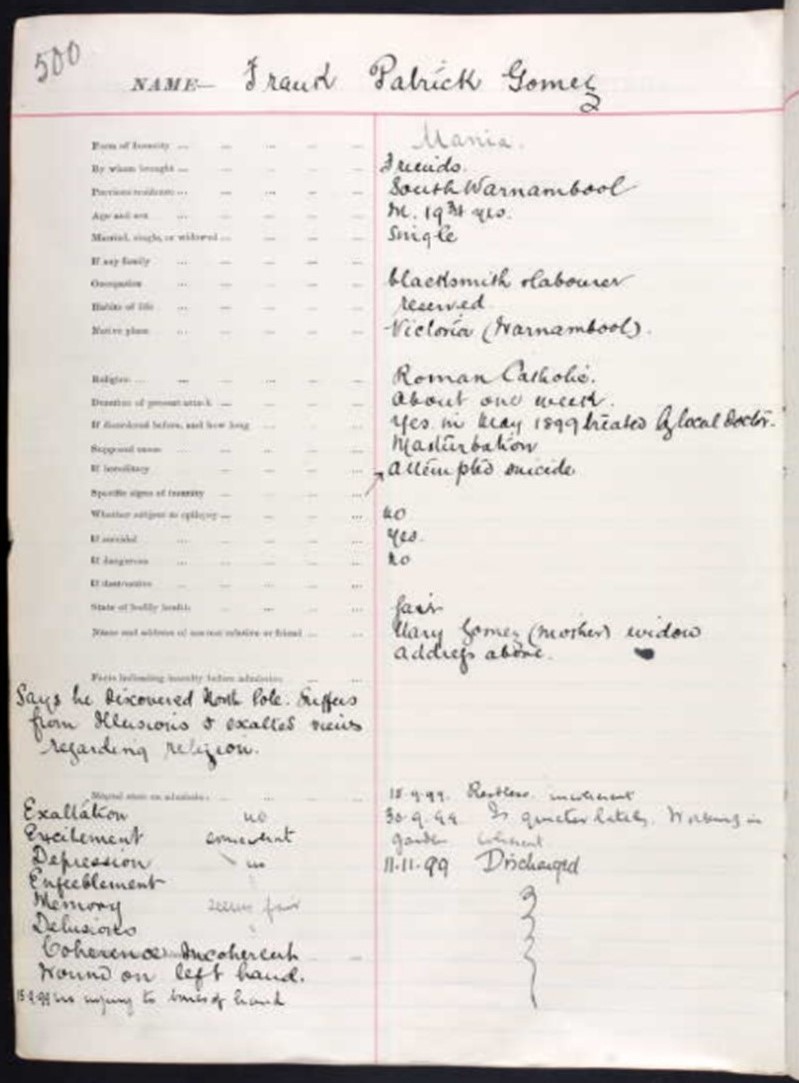
Frank’s difficult time in the Kew Asylum
By 1901 Frank was at Carlton as one of the 21 new young players being tried out in that early year in the VFL. Much like Bill Dodds and Jimmy Robinson in the same year, Frank Gomez played just a single game of VFL footy. His one game was a loss to Fitzroy at Princes Park as part of a largely unsuccessful season. At the end of the season Carlton appointed the League’s first coach, Jack Worrall, with a strict disciplinary approach. Frank did not continue with the club.
By 1903 he was back in Warrnambool living with his mother and working as a coach builder. But he soon moved to the “wild” west coast of Tasmania where mining jobs were plentiful.
He was very active in football across the region for nearly a decade. He lived first in the copper mining town of Germantown/ Mt Lyell where he captained the local team, was a club delegate to the Football Association and was the Association’s official “central umpire”. He chaired a meeting where it was resolved to move from the second tier competition to the first tier.
He later moved to the nearby silver mining town of Zeehan where he met and married local girl Marion Williams and a son, Frank junior, was born in 1909.
Frank would have played many times on Queenstown’s infamous gravel oval, also an experience some years later for Carlton’s Arthur Hodgson and much later for Lions coach Chris Fagan.
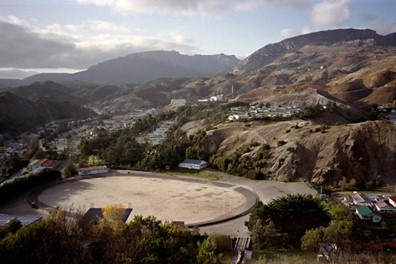
The gravel oval at Queenstown
In 1912 the local communities were struck a blow by one of Australia’s worst mining disasters when a fire underground led to the deaths of 42 miners in the Mt Lyell mine. We do not know if Frank was directly involved but, at a minimum he would have lost many friends and raised questions about whether this was a safe industry for a young family man to be working in. He moved to Melbourne, living in Port Melbourne and working as a wharf labourer.
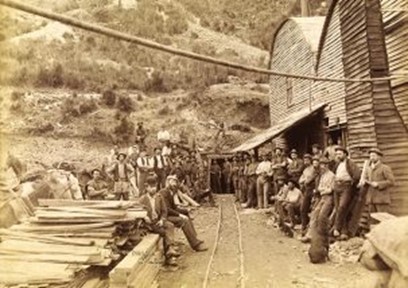
Waiting at the Mt Lyell mine as the disaster unfolded
Frank settled in a house just a couple of good torps from the Port Melbourne football ground. The Port Melbourne club was heavily associated with wharf labourers and the union movement. It was qualified to join the VFL at its formation in 1897 but was overlooked, considered a bit rough.
Frank junior started his own long association with football when he played as a forward and ruckman with Port Melbourne junior teams. It was said that “he lacked a bit of pace” but was picked up by Essendon to play in the VFL and played 22 games between 1929 and 1932. His more notable football achievements came when he returned to Port Melbourne to coach their junior team. They won over 100 successive matches. Frank was feted by the club for his efforts and was later elected as a club Committeeman.
Frank senior had some sadnesses: a brother suicided by hanging in 1913 and his daughter died in childbirth with her first child in 1948. He died on 17 March 1954 at his home at 161 Farrell Street in Port Melbourne where he had lived and worked up till his death at age 76.
It appears that, after a rough start in life, Frank had got his act together and led a tough but rewarding life that belied his childhood years. Maybe Carlton played a part in bringing some purpose to his life.
Last updated by Jamie Sanderson ·